Posts

How can nature-killing agriculture be more sustainable?

Image
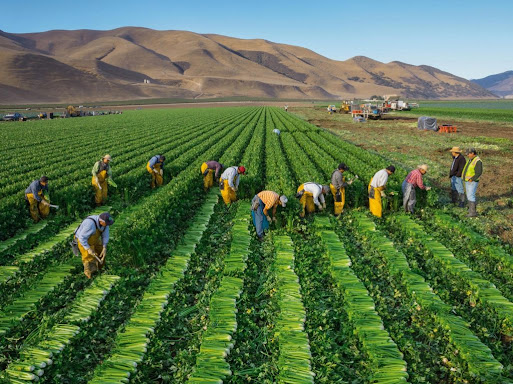
  Modern agricultural systems have achieved astounding gains in productivity in the past 50 years, but they have come at an enormous cost to nature. Humanity relies on the diversity of plants and animals in the oceans, soils, sky and on land to make the planet habitable, by keeping the air and water clean, providing the basis for many medicines, and pollinating crops . At the same time, humanity needs to produce enough food for 8 billion people. But there are ways to make the food system more nature- and climate-friendly . Intensive livestock farming has the greatest impact on species loss, because of its high emissions, water pollution and the amount of food needed to feed the animals. "Intensive farming of any sort, it's just inimical to the insects that really need to thrive, and along with insects comes everything else," said Gemmill-Herren.
Climate Impact on Agriculture?

Image
  Agriculture is an important sector of the U.S. economy. The crops, livestock, and seafood produced  in the United States contribute more than $300 billion to the economy each year.[1]  When food-service and other agriculture-related industries are included, the agricultural and food sectors contribute more than $750 billion to the gross domestic product. Agriculture and fisheries are highly dependent on the climate. Increases in temperature and carbon dioxide (CO2) can increase some crop yields in some places. But to realize these benefits, nutrient levels, soil moisture, water availability, and other conditions must also be met. Changes in the frequency and severity of droughts and floods could pose challenges for farmers and ranchers and threaten food safety. Meanwhile, warmer water temperatures are likely to cause the habitat ranges of many fish and shellfish species to shift, which could disrupt ecosystems. Overall, climate change could make it more diffic...

What do you mean Conservation Agriculture??

Image
Conservation agriculture is based on the interrelated principles of minimal mechanical soil disturbance, permanent soil cover with living or dead plant material, and crop diversification through rotation or intercropping. It helps farmers to maintain and boost yields and increase profits, while reversing land degradation , protecting the environment and responding to growing challenges of climate change. To reduce soil disturbance, farmers practice zero-tillage farming, which allows direct planting without plowing or preparing the soil. The farmer seeds directly through surface residues of the previous crop. Zero tillage is combined with intercropping and crop rotation, which means either growing two or more crops at the same time on the same piece of land, or growing two different crops on the same land in a sequential manner . These are also core principles of sustainable intensification. Sustainable intensification is a process to increase agriculture yields without adverse...

What’s Up with Agricultural Technology?

Image
  For instance, a farmer may be interested in sustainably growing more food using less space while minimizing environmental impact. They could try vertical farming, which involves growing produce indoors on vertically stacked shelves . Vertical growers control critical environmental factors like light, humidity, and water to achieve year-long harvests , all while using 70-95% less water than traditional methods. Many people can find vertically grown leafy greens or herbs in their grocery stores today. On the other hand, maybe food safety or origin is of interest. Some companies are using block chain to track where and when food products change hands before reaching your lunchbox. We’ll cover how block chain works in a later article, but for now, note that this traceability helps companies pinpoint foodborne illness outbreaks and helps consumers determine whether that “ wild-caught salmon ” was actually caught in the wild. While technology has consistently improved farming pract...

Importance Of Technology In Agriculture

Image
  The role of agriculture in all aspects of our life such as education, economy, culture, politics, etc. cannot be neglected. It is the  foundation   of all developments in the world. The role of agriculture is not limited to providing food to the total number of individuals in a certain country. Besides providing nourishment for our daily intake, agriculture also functions as an income source for every single nation that exists on this planet. Most of the manufacturing industries as well as business firms are dependent on it. Unfortunately, today’s generation is unaware of the true significance of agriculture in society. If  agriculture  does not get serious attention, you can expect your nation in an unstable and paralyzed condition in the recent future. Technology brings numerous modifications to agricultural machines and equipment. It increases productivity by decreases the volume of labor required. Implementing advanced technology may be quite expensi...

Agriculture: Why it is more important now than ever?

Image
  The agriculture sector in India stands at the crossroads of transformation. The green revolution - characterized by intensive modern farming techniques, high yielding variety (HYV) seeds and fertilizers, remains the most distinctive phase in the Indian agriculture sector. However, with rising consciousness for food safety and sustainable farming in India and around the world, it is imperative to reimagine the future course of India's agri sector. Agriculture is often attributed as the backbone of the Indian economy as 42% of the workforce depends on the agricultural sector to earn their livelihood. It contributes 19.9% to the GDP, indicating its significance to the country's economy. Farming, being one of the world's oldest and labor-intensive industries, necessitates resilience and innovation not only to boost productivity but also to ensure the sector's overall sustainability. Undoubtedly, COVID-19 has additionally intensified the need for agri-sector refo...

What Are Three Things Plants Need to Live?

Image
  Plants, like other organic matter , require certain substances in order to grow. Understanding a plant’s essential needs helps in growing healthy, strong plants. The three basic requirements for plant growth are water, light and nutrients. While these things are important to plant development, they should be given in moderation. Too much of any one substance can damage or even kill a plant. Water is one of the things plants need to live. Plant tissues comprise 80 to 95 percent water. Much of the water for plants comes from absorption of water within the soil. The moisture level of a soil directly affects the survival of a plant; should the soil become too dry, many plants will begin to dry up, wilt and even die off. Even in areas with limited moisture, such as deserts, plants still need water and have adapted ways to make the water received last as long as possible. Too much water, however, can be detrimental for plants. Allowing soil to dry out some between watering prevent...